A barcode scanner that turns any packaged food into real nutrition data
Scan a UPC, get calories, macros, and ingredients back, with an AI fallback reading the label when a product isn't in any database.
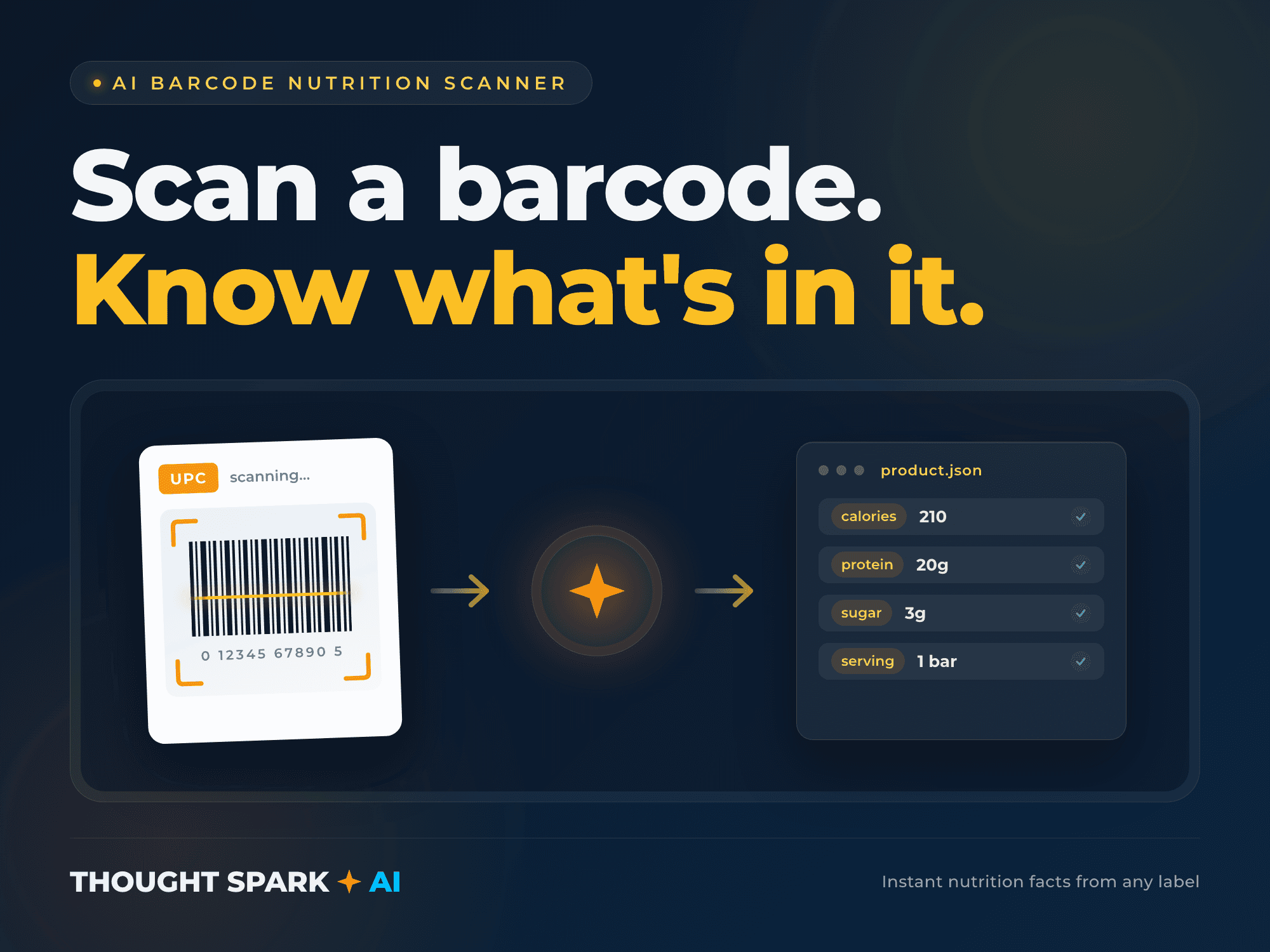
The failure mode of most barcode scanners isn't the scanning, it's the data behind it. A scanner that returns wrong or missing nutrition info is worse than no scanner, because a user trusts the number. I build these database-first: a UPC lookup checks USDA and Open Food Facts first, since verified nutrition data beats an AI guess every time it's available. AI only steps in as a fallback, reading the label photo itself when the product isn't in either database, which is where most scanners quietly give up.
This is the same capability I built into Money and Macros, my own live nutrition tracking app, so I've already worked through the parts that are easy to get wrong: camera capture that actually works in a mobile browser, barcode formats that don't match cleanly across databases, and serving-size math that has to agree with what's printed on the package.
It's a good fit for fitness and nutrition apps, meal planning tools, health coaching platforms, and grocery or wellness products, anywhere a user needs to go from a physical product to structured data without typing it in by hand.
What you get
- ✓Camera-based UPC barcode scanning working in a standard mobile browser, no app install required
- ✓Lookups against USDA FoodData Central and Open Food Facts as the primary data sources
- ✓AI fallback that reads the product label photo when a barcode isn't found in either database
- ✓Structured JSON response: calories, macros, serving size, and ingredients
- ✓Confidence handling so a user can see when a result came from a verified database versus an AI read
- ✓API endpoint or direct integration into your existing app
- ✓A handoff doc covering how the lookup chain works and how to add another data source later
How it works
- 1You share example barcodes from your actual use case, confirm which data sources matter, and tell me exactly which fields you need back.
- 2I build the scanner on a branch: camera capture, database lookups, and the AI fallback for labels the databases miss.
- 3I test it against your example barcodes until the numbers check out, then you try it yourself on a preview deployment.
- 4I deploy to production and hand off, including what to do if a new product type needs support later.
Pricing
Fixed price, fixed delivery date. Not sure which tier fits? Book a scoping call and we’ll figure it out together.
Starter
- ✓Camera-based barcode scanning in a mobile browser
- ✓UPC lookup against USDA and Open Food Facts
- ✓Calories, macros, serving size, and ingredients returned as structured JSON
- ✓Tested against your example barcodes
- ✓Source code included
A straightforward UPC lookup: scan, get calories and macros back as JSON.
Standard
- ✓Everything in Starter
- ✓AI fallback that reads a photographed label when the barcode isn't in either database
- ✓Confidence indicator so your app can flag AI-read results for a user to confirm
- ✓Result caching, so a product scanned once doesn't hit the AI fallback again
- ✓Direct integration into your existing app or database, not just a standalone endpoint
A product that needs the AI fallback for items missing from the standard databases.
Advanced
- ✓Everything in Standard
- ✓Full integration into your existing meal log, inventory, or tracking data model
- ✓Custom nutrition fields beyond the standard macro set, if your product needs them
- ✓Batch scanning support for multiple items in one session
- ✓Accuracy review against a larger sample of your real product catalog
- ✓Post-launch check on day 3 and day 7 after go live
An app that needs this scanner integrated end to end into an existing meal log, inventory, or tracking system.
Add-ons
- +Fast delivery: +$195 to +$495 depending on tier and turnaround
- +Additional revision beyond the included round: +$195
- +Support for a second product category (supplements, non-food packaged goods): +$400
- +Receipt or ingredient-label scanning added alongside barcode scanning: +$450
- +30 days of post-launch support: +$400
Questions
Why not just use AI for every scan?
Because a verified database entry is more accurate than an AI reading a photo, and accuracy is the entire point of a nutrition scanner. AI only runs when the databases come up empty, which keeps the numbers your users see as reliable as possible while still covering products that aren't in any database.
What if a product isn't in USDA or Open Food Facts and the label photo is unclear?
The AI fallback does its best read and the result comes back flagged as lower confidence, so your app can prompt the user to confirm or correct it rather than silently showing a number that might be wrong.
Does this work for products outside the US?
Open Food Facts has meaningful international coverage, so many non-US products resolve correctly. USDA's database is US-focused. Tell me your target market before ordering and I'll confirm the fit.
Can this become part of a bigger nutrition or fitness app?
Yes, that's what the Advanced tier is for: wiring the scanner directly into your existing meal log, tracking, or inventory system instead of leaving it as a standalone tool.
What do you need from me to start?
A handful of real example barcodes from products your users would actually scan, and the exact fields you want back.
Ready to scope it out?
A short call to confirm which tier fits and lock in a delivery date. No obligation.