Kinship EHR
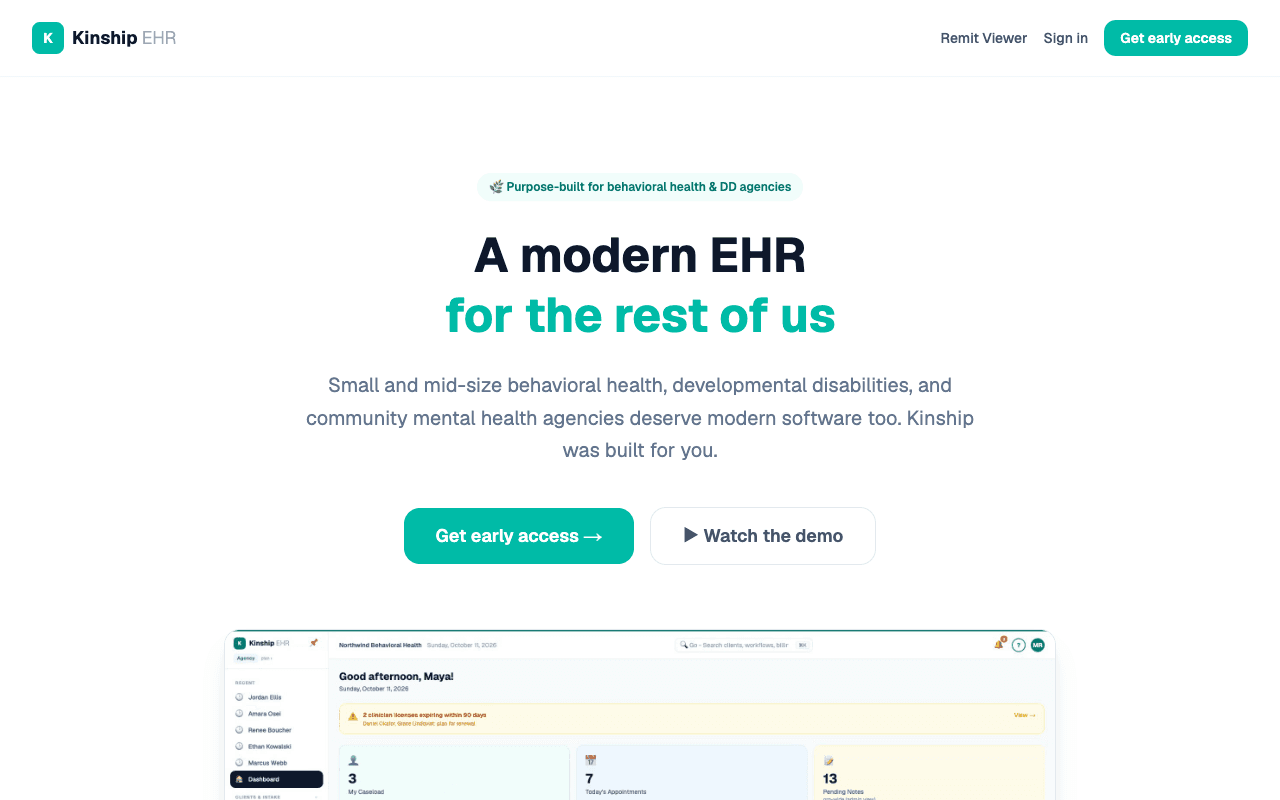
Multi-tenant electronic health record for small behavioral health and developmental disability agencies.
The need
A record system for small behavioral health and developmental disability agencies has to keep each agency's clinical and billing data apart, speak their billing codes, and carry the screeners and plan-review cadence their clinicians already use. Kinship is built around those constraints: tenant isolation in the database, a claims engine, and clinical workflows in the core.
What was hard
- 1
Database-enforced tenant isolation
Every request pins a row-level security role for its organization, and about 40 CI guard scripts fail the build on a leak.
- 2
Claims engine
A pure claim state machine, 837P assembly and fourteen billing rules produce claims ready to submit.
- 3
Forward-only BAA signing
Agreement status moves only forward, using compare-and-set writes.
- 4
Clinical screeners and plans
PHQ-9, GAD-7 and C-SSRS screeners are built in, along with treatment-plan review cadence and signatures.
- 5
Field encryption and audit
Sensitive fields use AES-256-GCM encryption, changes go to an audit log, and dictation streams into notes.
- 6
Multi-agency identity
A person who works at several agencies gets an active profile chosen by a pure selection function.